
Measure Details
Percentage of patients 3-17 years of age who had an outpatient visit with a Primary Care Physician (PCP) or Obstetrician/Gynecologist (OB/GYN) and who had evidence of the following during the measurement period. Three rates are reported.- Percentage of patients with height, weight, and body mass index (BMI) percentile documentation
- Percentage of patients with counseling for nutrition
- Percentage of patients with counseling for physical activity
Measure Parameters
Numerator 1
Patients who had a height, weight, and body mass index (BMI) percentile recorded during the measurement period..Numerator 2
Patients who had counseling for nutrition during the measurement period.Numerator 3
Patients who had counseling for physical activity during the measurement period.Denominator
Patients 3-17 years of age by the end of the measurement period with at least one outpatient visit with a primary care physician (PCP) or an obstetrician/gynecologist (OB/GYN) during the measurement period.Exclusions/Exceptions
- Exclude patients who have a diagnosis of pregnancy during the measurement period.
- Exclude patients who are in hospice care for any part of the measurement period.
Elation Workflows
Documenting measure requirements using a Clinical Reminder in a visit note
All 3 numerators need to be met in order to close this measure for patients who are between 3 to 17 years of age by December 31, 2026.| 1 | To immediately meet the requirements for Numerator 1, create a visit note with a date within the measurement period and record the patient’s height and weight in the vitals section. After a few seconds, the BMI will be calculated. 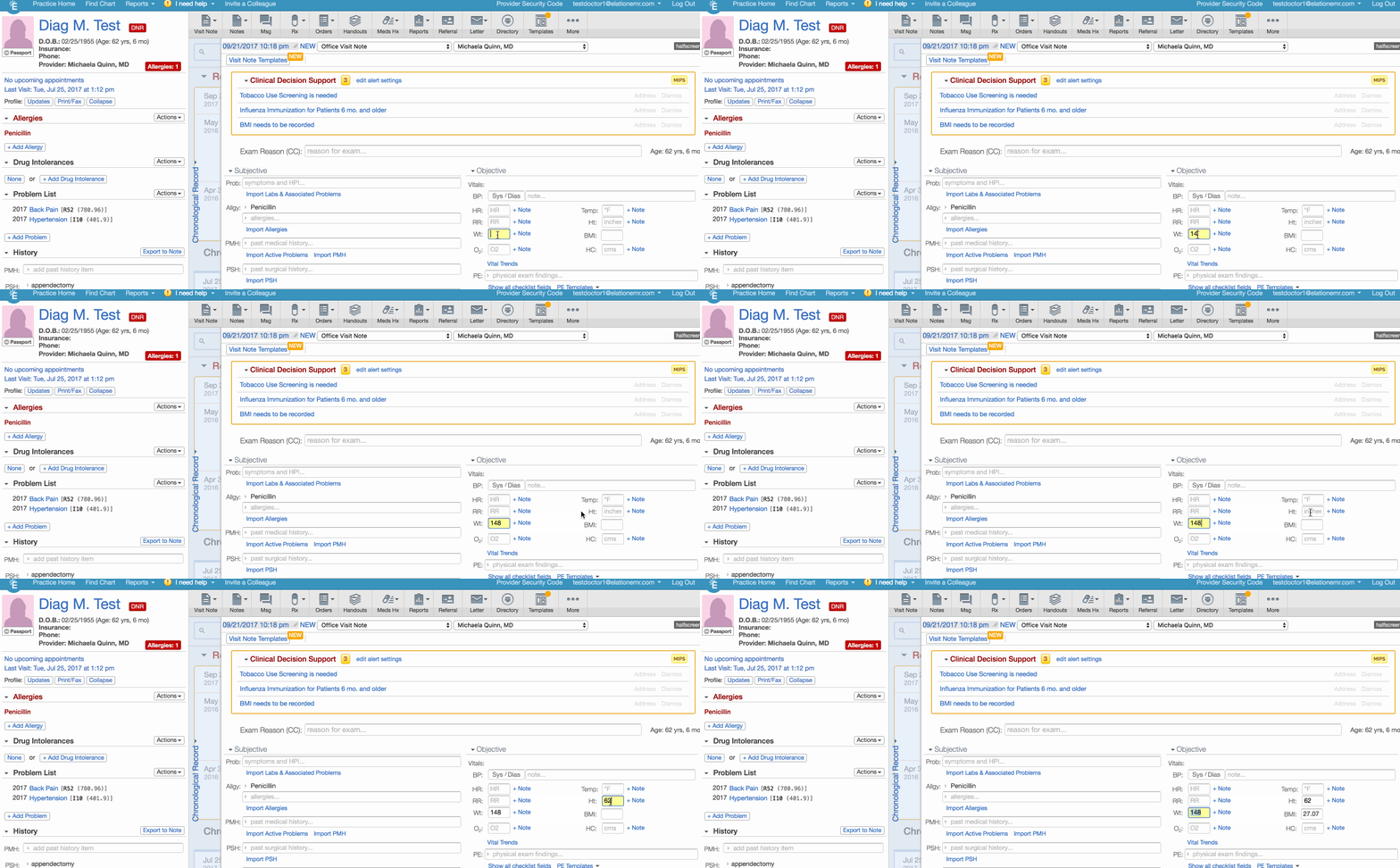 |
|---|---|
| 2 | To immediately meet the requirements for Numerator 2, Click Address in the Preventative: Nutrition Counseling for Children and Adolescents reminder at the top of the visit note draft. • Click Counseled re: nutrition. • Counsel the patient and/caretaker as you would through your normal workflows. • A NUTRITION CNSL document tag will be appended to the visit note to indicate that it meets numerator 2 requirements. 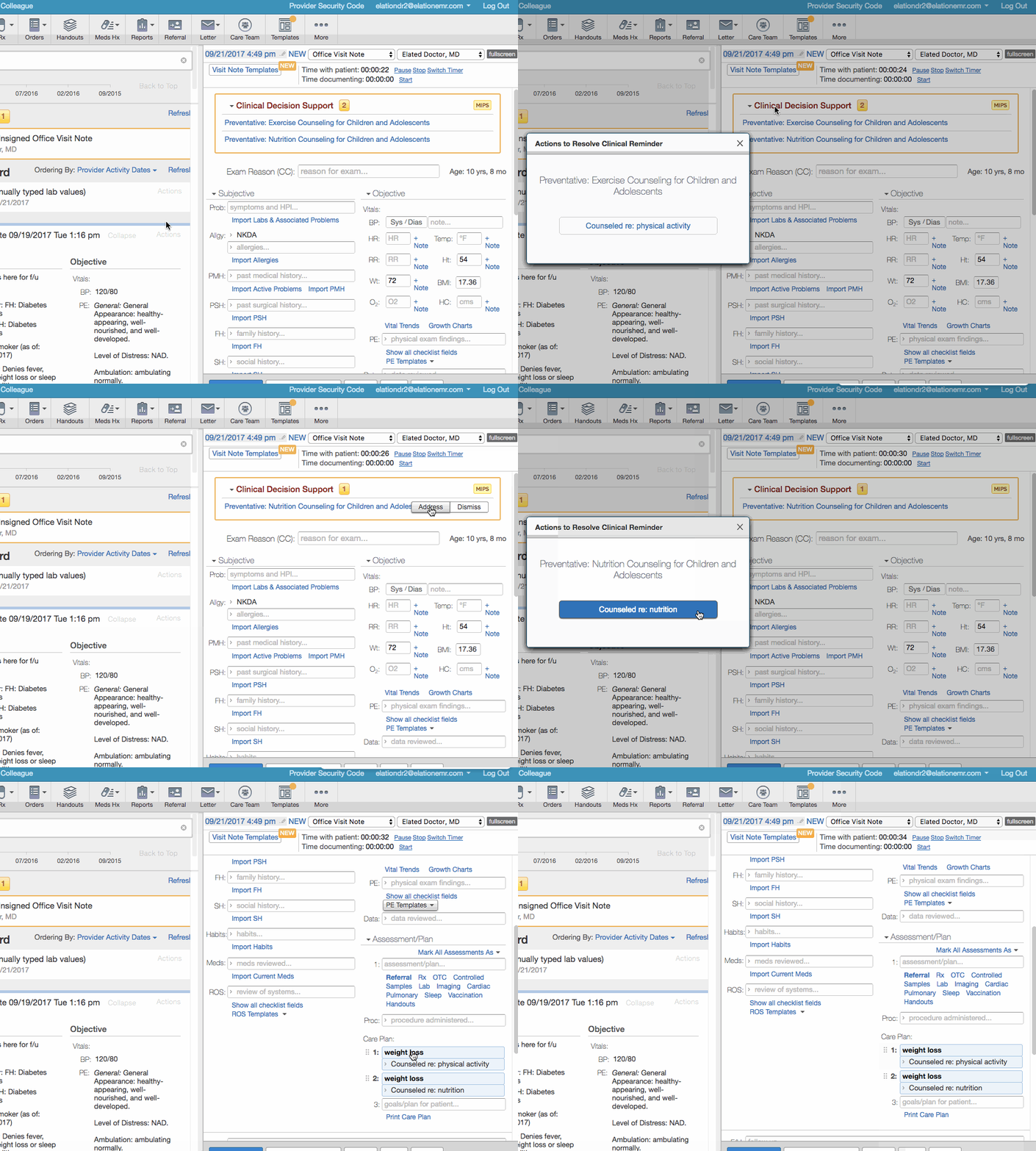 |
| 3 | To immediately meet the requirements for Numerator 3, Click Address in the Preventative: Exercise Counseling for Children and Adolescents reminder at the top of the visit note draft. • Click Counseled re: physical activity. • Counsel the patient and/caretaker as you would through your normal workflows. • A PHYS ACTIVITY CNSL document tag will be appended to the visit note to indicate that it meets numerator 3 requirements. |
Documenting measure requirements from a report
Click here for more details about Document Tags.
Documenting exclusions/exceptions
Measure Information
Over the last four decades, childhood obesity has more than tripled in children and adolescents 2 to 19 years of age (from a rate of approximately 5 percent to 18.5 percent) (Fryar, Carroll, & Ogden, 2014; Hales et al., 2017). Non-Hispanic black and Hispanic youth are more likely to be obese than their non-Hispanic white and non-Hispanic Asian counterparts. In 2015-2016, approximately 22 percent of non-Hispanic black and 26 percent of Hispanic youth were obese compared to approximately 14 percent of non-Hispanic white and 11 percent of non-Hispanic Asian youth (Hales et al., 2017). Childhood obesity has both immediate and long-term effects on health and well-being. Children who are obese have higher rates of physical health conditions, such as risk factors for cardiovascular disease (like high blood pressure and high cholesterol), type 2 diabetes, asthma, sleep apnea, and joint problems. There is also a correlation between childhood obesity and mental health conditions, such as anxiety and depression (Centers for Disease Control and Prevention, 2016). In addition, children who are obese are more likely to be obese as adults and are therefore at risk for adult health problems, such as heart disease, type 2 diabetes, and several types of cancer (Centers for Disease Control and Prevention, 2016). The direct medical costs associated with childhood obesity total about 14 billion spent on care related to childhood obesity in the United States (Finkelstein, Graham, & Malhotra, 2014). Because obesity can become a lifelong health issue, it is important to screen for obesity in children and adolescents, and to provide interventions that promote weight loss (U.S. Preventive Services Task Force, 2017). Reference: Measure Information from CMSFrequently asked questions
Why isn't my patient (age 17) appearing in the denominator for this measure?
Why isn't my patient (age 17) appearing in the denominator for this measure?
While the patient may have been 17 at the time of their visit, the official CMS technical specifications calculate age based on a specific “snapshot” date: December 31st of the measurement year.Pro tip: For quality reporting, the “Age” column in the EHR usually refers to the patient’s current age today, but the CQM report only cares about their age on December 31st. If a patient turns 18 at any point during the measurement year, they will not be included in that year’s report for this measure.