
Measure Details
Percentage of patients, regardless of age, with a diagnosis of dementia for whom an assessment of cognition is performed and the results reviewed at least once within 12 months preceding who have two or more visits during the measurement period.Measure Parameters
Numerator
Patients for whom an assessment of cognition is performed and the results reviewed at least once within a 12-month period.Denominator
All patients, regardless of age, with a diagnosis of dementia.Exclusions/Exceptions
Except patients with documentation of patient reason(s) for not assessing cognition.Elation Workflows
Elation has implemented dedicated workflows that reflect standardized requirements we do not control for certification to ensure structured and reportable tracking of measure specifications for supported electronic Clinical Quality Measures. To optimize performance per the specifications, please adhere precisely to the workflows outlined in the referenced Help Center article.
Documenting dementia diagnosis in the patient’s chart
Patients must have an active diagnosis of dementia recorded in their chart during the measurement period. Elation looks for a dementia ICD-10 code in either a visit note for the measurement period or in the Problem List. To add a dementia diagnosis to the Problem List:
Documenting measure requirements using a Clinical Reminder in a visit note
| 1 | Click Address in the Cognitive assessment for dementia is due reminder at the top of the visit note draft. Patient has an active diagnosis of dementia either recorded: • Patient has a signed visit note dated within the last 12 months. |
|---|---|
| 2a | To meet the numerator requirements immediately by administering a cognitive assessment for the patient: Click Administer cognitive assessment. • Administer the cognitive assessment through your normal workflows. • A Cognitive Assessment document tag will be appended to the visit note to indicate that it meets numerator requirements. 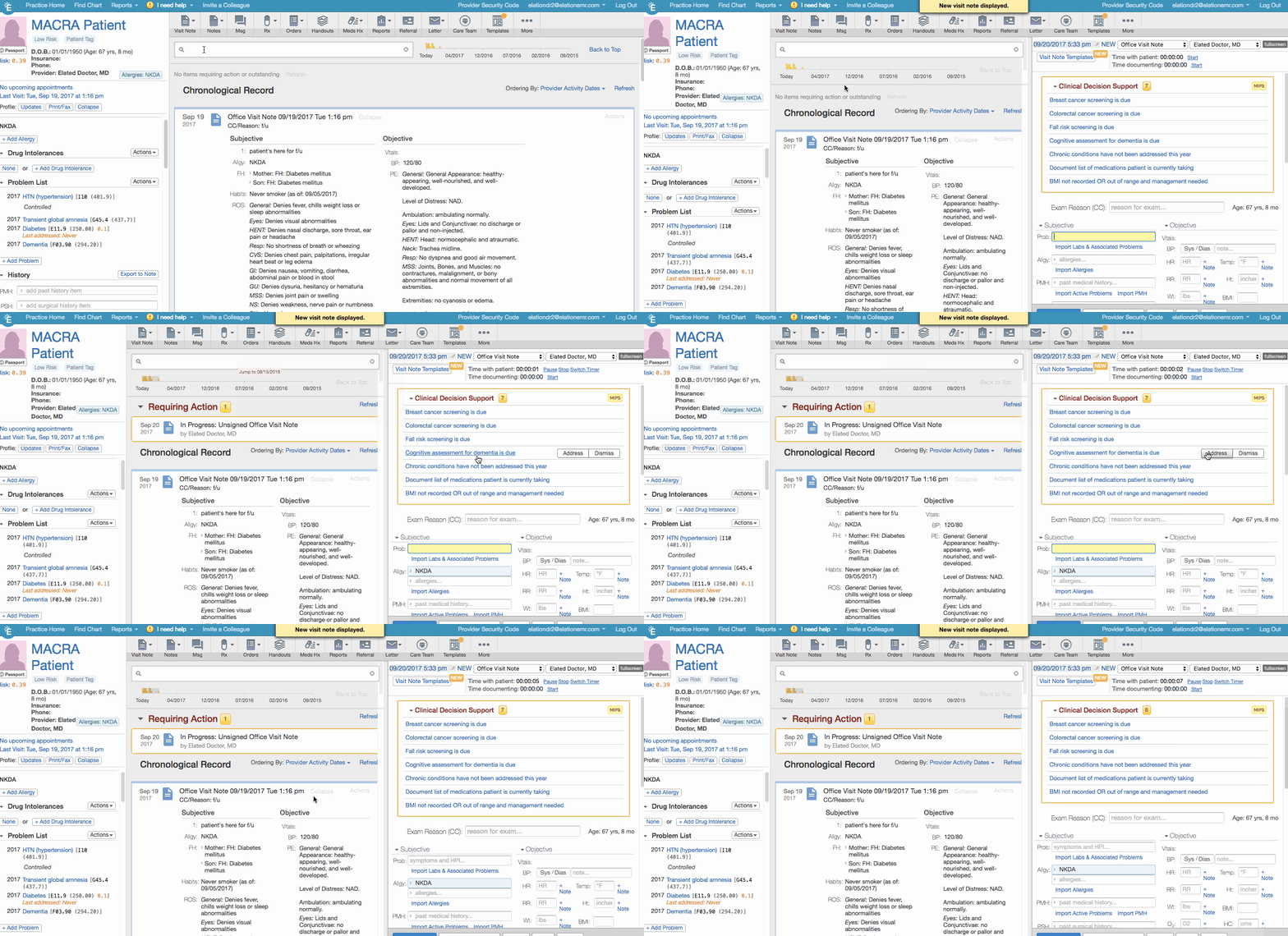 |
| 2b | To meet the numerator requirements immediately by documenting a cognitive assessment for the patient: Click Document cognitive assessment. • Select the report that documents the completed cognitive assessment. • Click Attach Item. • A Cognitive Assessment document tag will be appended to the selected report to indicate that it meets numerator requirements. |
Documenting measure requirements from an existing cognitive assessment report
Click here for more details about Document Tags.
Documenting exclusions/exceptions
Click + Tag at the bottom of the visit note draft and add the following document tag - EXCLUSION: NO COG ASSESSMENT.Measure Information
An estimated 5.8 million of adults in the US were living with dementia in 2019. Dementia is often characterized by the gradual onset and continuing cognitive decline in one or more domains including memory, communication and language, ability to focus or pay attention, reasoning and judgment and visual perception (Alzheimer’s Association, 2019). Cognitive deterioration represents a major source of morbidity and mortality and poses a significant burden on affected individuals and their caregivers (Daviglus et al., 2010). Although cognitive deterioration follows a different course depending on the type of dementia, significant rates of decline have been reported. For example, one study found that the annual rate of decline for Alzheimer’s disease patients was more than four times that of older adults with no cognitive impairment (Wilson et al., 2010). Nevertheless, measurable cognitive abilities remain throughout the course of dementia (American Psychiatric Association, 2007). Initial and ongoing assessments of cognition are fundamental to the proper management of patients with dementia. These assessments serve as the basis for identifying treatment goals, developing a treatment plan, monitoring the effects of treatment, and modifying treatment as appropriate. Reference: Measure Information from CMSAdditional Information
Use these tools to satisfy the cognitive assessment requirement:The Mini-Mental State Examination (MMSE) has not been well validated for non-Alzheimer related dementias.