
This measure has been removed as an eCQM for Traditional MIPS reporting .
It remains an applicable eCQM for other programs and will continue to be available in Elation. However, it will not be eligible to count toward Traditional MIPS submissions via QRDA for the 2026 MIPS Performance Year. For a list of 2026 MIPS eligible eCQMs, see our MIPS (2026) Overview article.
Measure Details
Percentage of adults 45-75 years of age who had appropriate screening for colorectal cancerMeasure Parameters
Numerator
Patients with one or more screenings for colorectal cancer. Appropriate screenings are defined by any one of the following criteria:- Fecal occult blood test (FOBT) during the measurement period.
- Flexible sigmoidoscopy during the measurement period or the four years prior to the measurement period.
- Colonoscopy during the measurement period or the nine years prior to the measurement period.
- Stool DNA (sDNA) with FIT test during the measurement period or the two years prior to the measurement period.
- CT Colonography during the measurement period or the four years prior to the measurement period.
Denominator
Patients 46-75 years of age by the end of the measurement period with a visit during the measurement period.Exclusions/Exceptions
- Exclude patients who are in hospice care for any part of the measurement period.
- Exclude patients with a diagnosis or past history of total colectomy or colorectal cancer.
- Exclude patients receiving palliative care during the measurement period.
- Exclude patients 66 and older by the end of the measurement period who are living long term in a nursing home any time on or before the end of the measurement period.
- Exclude patients 66 and older by the end of the measurement period with an indication of frailty for any part of the measurement period who also meet any of the following criteria advanced illness criteria:
- Advanced illness diagnosis during the measurement period or the year prior
- OR taking dementia medications for any part of the measurement period or the year prior
Elation Workflows
Documenting measure requirements using a Clinical Reminder in a visit note
Clicking Dismiss will dismiss the reminder and the reminder will not appear again until a new visit note draft is opened.
Documenting measure requirements using the Health Maintenance section

Documenting measure requirements from the test results
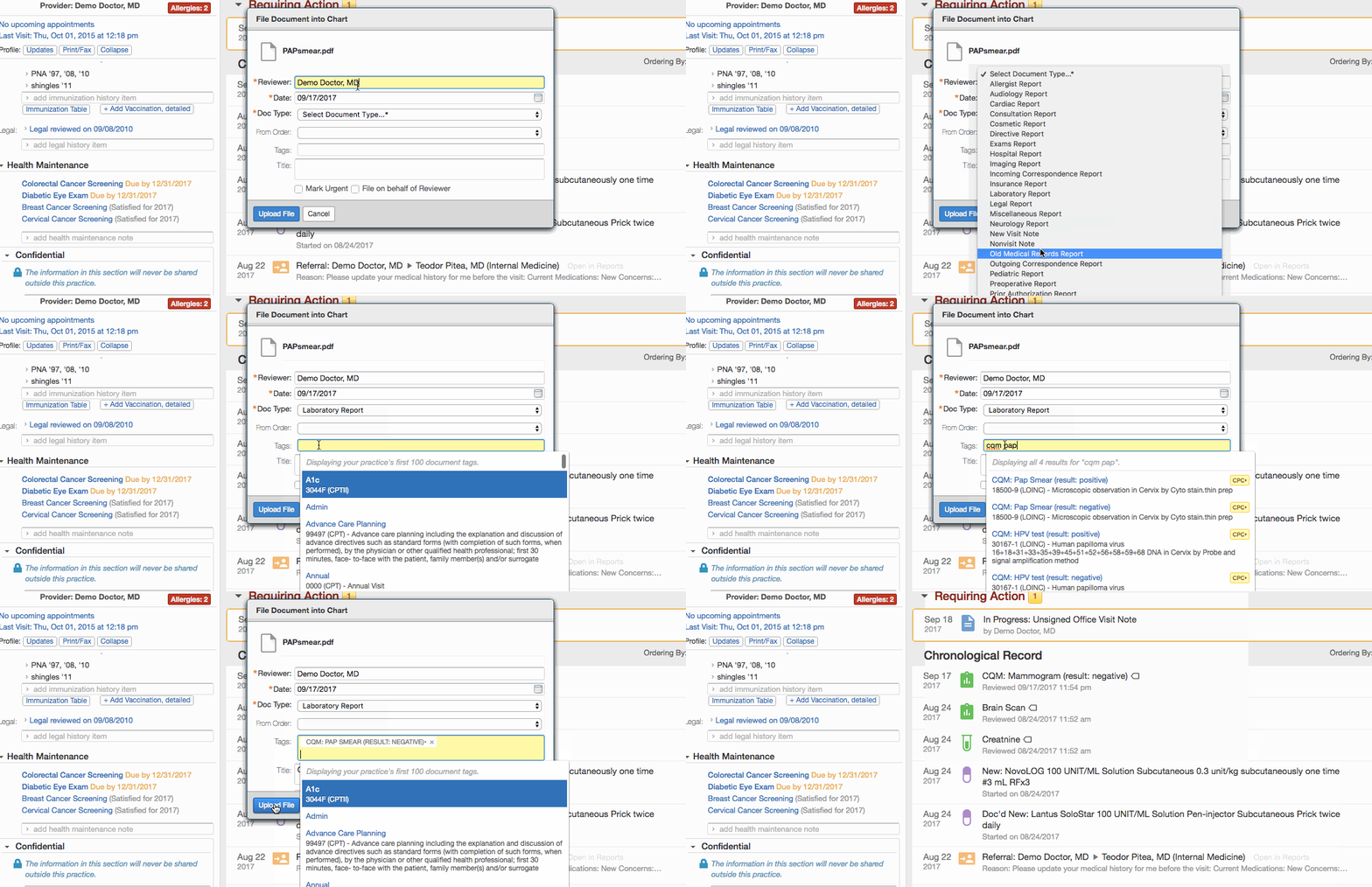
Documenting exclusions/exceptions
Documenting frailty
To document frailty in Elation using
- Frailty diagnosis, advanced illness codes and/or medications
- Add a frailty diagnosis to the Problem List. You must select from one of the frailty codes listed here.
- Record one of the following:
- an advanced illness diagnosis in 2 outpatient encounters using one of the codes listed here.
- an advanced illness in 1 inpatient counter using one of the codes listed here.
- a dementia medication in the patient’s chart.
- A frailty device code
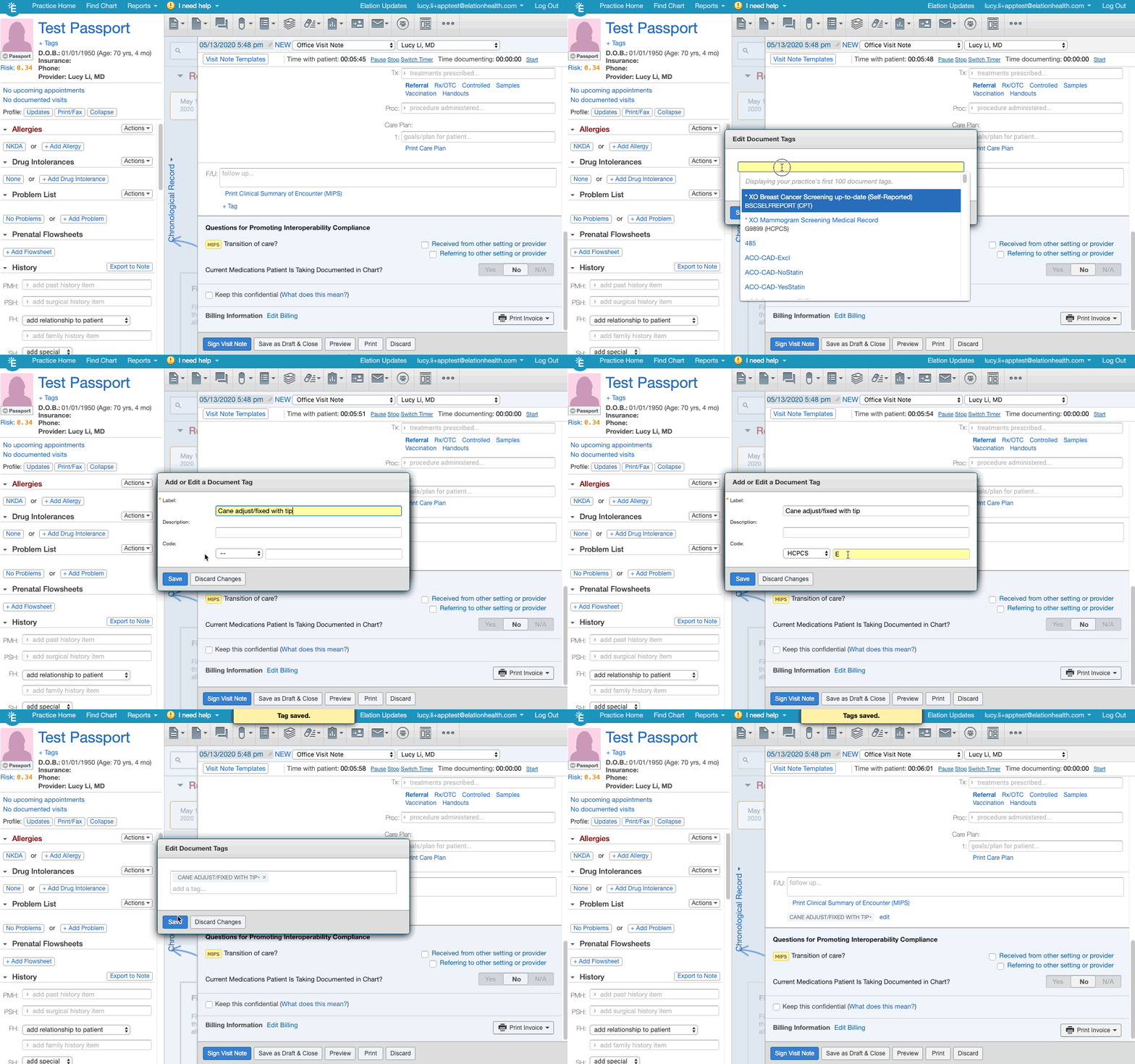
- Click + Tag at the bottom of the visit note draft.
- Create/add the appropriate document tag for the relevant frailty device from this list of frailty device codes.
- If you are creating the document tag for the first time for a frailty device, make sure the document tag has the device’s HCPCS code listed.
Measure Information
Colorectal cancer represents eight percent of all new cancer cases in the United States. In 2020, there were an estimated 147,950 new cases of colorectal cancer and an estimated 53,200 deaths attributed to it. According to the National Cancer Institute, about 4.2 percent of men and women will be diagnosed with colorectal cancer at some point during their lifetimes. For most adults, older age is the most important risk factor for colorectal cancer, although being male and black are also associated with higher incidence and mortality. Colorectal cancer is most frequently diagnosed among people 65 to 74 years old (National Cancer Institute, 2020). Screening can be effective for finding precancerous lesions (polyps) that could later become malignant, and for detecting early cancers that can be more easily and effectively treated. Precancerous polyps usually take about 10 to 15 years to develop into colorectal cancer, and most can be found and removed before turning into cancer. The five-year relative survival rate for people whose colorectal cancer is found in the early stage before it has spread is about 90 percent (American Cancer Society, 2020). Reference: Measure Information from CMSFrequently asked questions
Why isn't my patient (age 45) appearing in the denominator or showing a health maintenance reminder?
Why isn't my patient (age 45) appearing in the denominator or showing a health maintenance reminder?
While clinical guidelines recommend starting colorectal cancer screenings at age 45, the official CMS technical specifications require the patient to be 46 by the end of the measurement period (December 31st).Why the difference? CMS builds in a 1-year buffer to ensure eligibility for a full annual cycle so that providers are not penalized the moment a patient reaches the minimum age. This ensures the patient has been eligible long enough for a screening to have realistically occurred.Example: If a patient is 45 for the entirety of 2026 and does not turn 46 until 2027, they will not appear in the 2026 CQM reports. They will automatically be included starting January 1st of the year they turn 46.
Why does a Stool DNA (sDNA) with FIT test only count for some measurement periods and not others?
Why does a Stool DNA (sDNA) with FIT test only count for some measurement periods and not others?
The lookback window is tied to the measurement period, not to a fixed 3 years from the test date. Each measurement period counts a test performed during that period or the two calendar years immediately before it.Example: A Stool DNA (sDNA) with FIT test completed in 2024 satisfies the numerator for measurement periods 2024, 2025, and 2026, since each of those periods’ window reaches back to 2024. That same test will not count for measurement period 2027, since 2027’s window only reaches back to 2025.In short, don’t count 3 years forward from the test date. Instead, check whether the test date falls within the current measurement year or the two years immediately before it.